
Have you ever watched yourself do the very thing you promised you wouldn’t, and thought, “Why on earth did I just do that?”
To answer that, it helps to separate two things we usually lump together: your brain and your mind.
The brain is the hardware
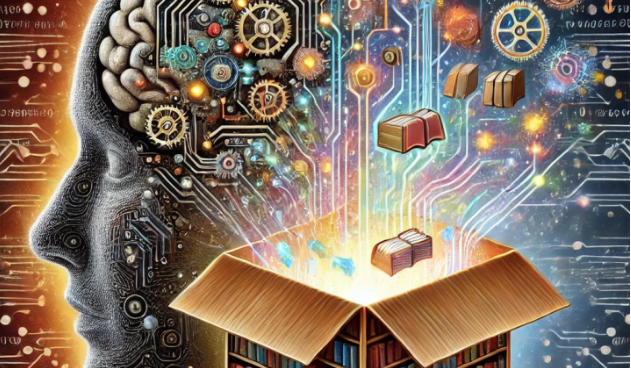
I think of the brain as the hardware on a computer. It stores everything you’ve learned: memories, facts, skills, faces, the way to your mum’s house. It does the processing, keeps your attention going, moves your body and lets you talk.
It’s organised a bit like a library. The books you use all the time sit on the shelf by the door. The ones you never touch get pushed further back, and eventually you can’t find them at all. Skills work the same way. The first time you drive a car it takes every ounce of concentration. A few years later you can do it while wondering what to have for dinner.
The mind is the software
The mind is the operating system that runs on that hardware. It decides how to use what’s stored, and it works on fairly simple rules: if this happens, do that. If someone raises their voice, go quiet. If you make a mistake, apologise before anyone notices. If there’s cake, eat the cake.
Once a rule has been used often enough, it runs automatically. That’s very economical for the brain, because automatic programmes cost almost nothing to run. The downside is that you’re not really steering any more. You’re on autopilot, and most adults spend most of the day there.
That’s a big part of why changing behaviour is so hard. Brains switch between steering and autopilot so smoothly that you rarely notice the handover, and you can’t steer something you don’t realise you’ve let go of.
Who wrote your operating system?
You did, mostly before you were old enough to know you were doing it. From very early on, your brain was working out by trial and error how to stay safe, how to get your needs met and how to fit in with the people around you. By about 12 the operating system is largely written, and it doesn’t update much on its own unless the conditions are right. Therapy is one of those conditions.
So a lot of us are running adult lives on software written by a child. Children’s strategies are often clever for a child’s world. Keeping quiet so Dad doesn’t get cross is a sensible plan at seven. At forty, in a team meeting, it’s a lot less useful.
Personality and coping
The particular way your mind uses what’s stored becomes what we call personality and coping style. Every coping strategy you have was designed to help with something. The trouble is that brains can be very rigid about it. They like order and clarity, so when something goes wrong they make up a story about why, turn the story into a rule, and keep applying the rule long after the situation has changed.
Sometimes the rule just doesn’t work very well. That’s normal, because brains learn by trying things. Problems start when an unhelpful rule gets repeated so often that it becomes the default.
When the brain runs out of ideas
If one strategy fails, the brain usually tries another. But what happens when it feels it has tried everything and nothing has worked? One way I think about depression and anxiety is as the brain reaching the end of its list. It pulls back and starts avoiding. Hopelessness can be what it feels like when a problem-solving system has run out of solutions.
So what can you do?
Here’s the hopeful bit. If your patterns are software rather than hardware, they can be rewritten. They were learned, so they can be relearned, slowly and with practice, by giving your brain new experiences that work better than the old rules did.
A good place to start is simply noticing. Next time you catch yourself doing the thing you wish you didn’t, ask: “What rule is running here, and how old is it?” You might be surprised how young the person who wrote it was.
What’s one rule you’ve noticed your own operating system still running?
If you’d like help working with your brain rather than against it, I offer online therapy across the UK, as well as neurofeedback at home.