
You’re at a friend’s birthday drinks. Someone new says, “Hi, I’m Rachel.” You smile, say hello, shake her hand. About ten seconds later you realise you have no idea what her name is.
Cue the little voice in your head: “That’s it. It’s going. I’m losing my memory.”
Hang on a minute. Let’s look at what actually happened.
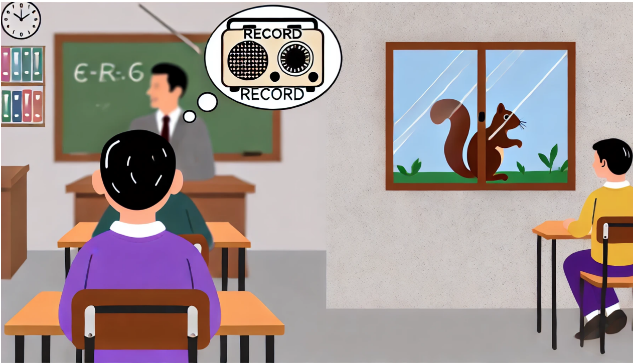
Did you press record?
I like to explain memory with an old cassette player. (Ask your parents, if you’re young enough to need to.) Your favourite song comes on the radio. If you want to keep it, you have to press record. If you just sit back and enjoy it, the song is lovely while it lasts, and then it’s gone. You can’t play it back later, because it was never on the tape.
Your brain works in much the same way. Information only gets stored if your attention is on it. And at those drinks, where was your attention? Probably on whether your hair looked all right and what on earth you were going to say next. Rachel’s name sailed straight past while your brain was busy with more urgent business.
So nothing was lost. Nothing was recorded in the first place.
What happens after you press record
Even once you’ve paid attention, your brain doesn’t keep everything. New information sits in working memory for a short while, a sort of mental sticky note, while your brain decides whether it’s worth keeping. Things that seem useful or important get a better chance. That’s why you remembered what you were told would come up in the exam, and very little else.
After that, going back to something is what makes it stick. Every time you recall it or explain it to someone, the brain strengthens the connections that hold it. Leave it alone and those connections fade. Brains are very practical like that: if you never seem to need it, why keep paying to store it?
So when someone tells me they read a whole book and can’t remember a thing, my first question is usually: did you ever go back to it? Most of us read a chapter once and expect it to be filed for life. Brains have never worked like that, and it isn’t a sign that anything is wrong with yours.
So when is it a memory problem?
Real memory problems do happen. Brain injury, strokes, dementia and some other medical conditions can affect how memories are stored or found again. Those deserve proper attention, and if you’re worried, it’s sensible to get checked rather than sit with the worry.
But a great deal of everyday forgetting happens one step earlier, at attention, and attention is easily knocked off course. Stress, poor sleep, low mood, juggling too much at once and ADHD can all leave less attention to go round, so less gets recorded. From the inside, that feels exactly like forgetting. Your brain can’t tell you “I never stored that.” It just comes up empty.
If you’ve ever arrived home with no memory of the drive, that’s the same thing happening on autopilot. I wrote about it here.
A small experiment
This week, press record on purpose, just once a day. Next time you’re told a name, say it back (“Rachel, nice to meet you”) and use it once more before the conversation ends. Or when you put your keys down, say out loud, “Keys, shelf by the door.” You’ll feel a bit silly. Do it anyway, and see what happens to the forgetting.
What’s the thing you most often “forget”? And where is your attention usually going at that moment?
Worried about memory or concentration? A neurocognitive or memory assessment can show what is really going on.